
The U.S. Department of Energy notes that gaps and air leaks around doors can contribute to energy loss in homes, especially when openings no longer seal properly. While people often connect this issue with weather stripping or insulation, another overlooked factor sits much closer to eye level. Door alignment problems can slowly change how a home functions over time.
Many homeowners assume a sticking key or difficult lock simply means the hardware has reached the end of its lifespan. During repair work, however, technicians often discover that the issue extends beyond the lock itself. Assessments performed by a locksmith can sometimes reveal wider door-system concerns, including shifting frames, hinge movement, and subtle structural changes that have developed over many years.
Why Older Homes Often Develop Door and Lock Issues
Homes naturally move and settle as they age. Materials expand during warm seasons and contract during colder periods. Wood absorbs moisture and dries repeatedly over time. Foundations can also shift slightly as years pass. These changes may seem minor when viewed separately, yet their cumulative effect can influence how doors open and close.
Research published by the National Institute of Standards and Technology (NIST) has shown that environmental factors such as humidity and temperature changes affect building materials and structural movement. A shift of only a few millimeters can create enough change to affect door operation.
At first, people rarely notice the warning signs. A door might need a gentle push before latching. Keys may feel slightly tighter when turning. Small scraping sounds near the floor may come and go. Since these issues often appear gradually, they become part of everyday life and are easy to ignore.
Despite their subtle nature, these changes place extra pressure on components designed to operate with precise spacing.
What Started as a Lock Replacement Became a Bigger Discovery
Many repair projects begin with a simple concern. A homeowner notices that the deadbolt feels stiff or the key requires extra effort to turn. The obvious assumption is that the lock mechanism has worn out.
During closer inspection, a different picture sometimes emerges.
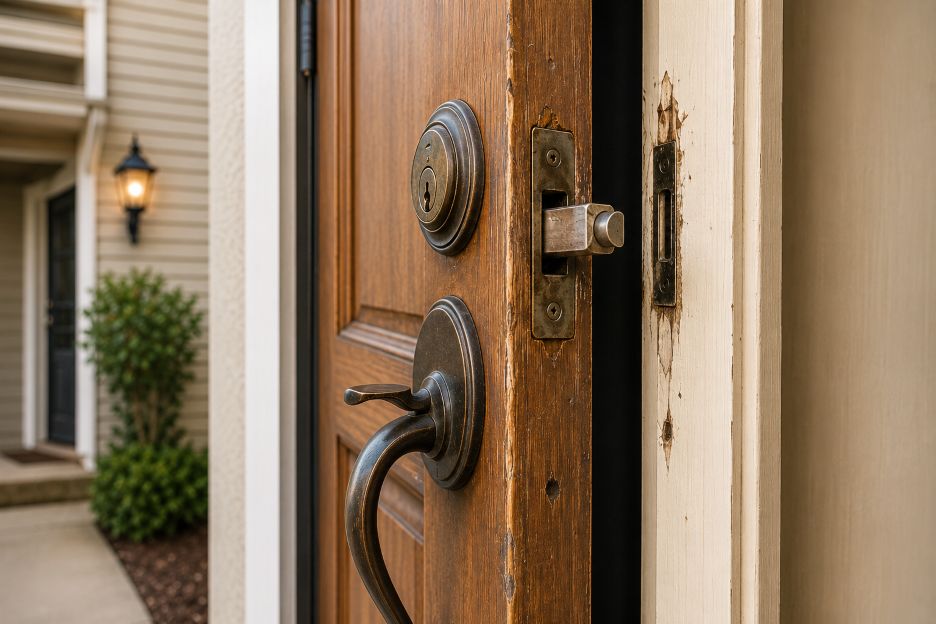
Technicians replacing aging hardware frequently discover that the latch no longer aligns correctly with the strike plate. Instead of entering the opening smoothly, the latch rubs against surrounding metal. Over time, that friction creates additional strain during every use.
Loose hinges can contribute to the issue. Slight frame movement can also play a role. In older wooden doors, subtle warping may create uneven pressure points across the frame.
These findings can be surprising because the visible problem often appears small. The lock itself may indeed be old, yet the underlying cause can come from the surrounding structure.
How Misalignment Quietly Increases Maintenance Costs
Faster Wear on Hardware Components
Locks are designed to operate smoothly when doors sit correctly within their frames. Misalignment changes that balance.
Instead of sliding naturally into position, latches and bolts encounter resistance. Internal springs and moving parts experience more force than intended. Repeated thousands of times over several years, this added stress accelerates wear.
Door hardware specialists frequently observe that premature hardware failure often results from operational strain rather than age alone.
Small Repairs Can Accumulate
Homeowners commonly respond to minor issues with temporary solutions. Hinges get tightened. Lubricants are applied. Small adjustments are made repeatedly.
Individually, these actions appear inexpensive. Collectively, they can create ongoing costs that continue for years.
Replacing handles, tightening screws, purchasing replacement parts, or scheduling repeated service visits gradually increases maintenance spending. Since these expenses occur over long periods, they often remain unnoticed.
Energy Efficiency Can Also Be Affected
Door alignment does more than influence security hardware. Uneven positioning can create gaps around door edges.
The U.S. Department of Energy explains that air leakage around doors contributes to unnecessary heating and cooling losses in residential buildings. A poorly aligned door may therefore create secondary costs beyond hardware replacement.
While the impact varies from home to home, small inefficiencies can build over time.
Security Performance May Change
A door that no longer closes correctly can affect how effectively security systems function. Deadbolts rely on proper engagement inside the frame. Even small positioning changes may reduce that effectiveness.
Security technicians often emphasize that strong hardware performs best when the surrounding structure supports it correctly.
Warning Signs Homeowners Often Ignore
Alignment problems rarely appear suddenly. Instead, they tend to develop gradually through everyday use.
- Keys become harder to turn
- Doors require extra force to close
- Scraping sounds appear near the frame or floor
- Uneven gaps become visible around door edges
- Hinges loosen repeatedly
- Locks occasionally fail to engage smoothly
These symptoms may seem minor, yet together they often suggest that surrounding components deserve closer inspection.
Preventive Maintenance Can Reduce Long-Term Costs
Addressing small issues early usually requires less effort than waiting for larger problems to develop. Periodic checks can help homeowners identify changes before they become expensive repairs. For homeowners dealing with recurring structural concerns, understanding the value of working with licensed renovation professionals may also provide useful perspective. Small alignment issues can sometimes point to wider maintenance needs that affect several parts of a home over time.
Periodic checks can help homeowners identify changes before they become expensive repairs.
- Inspect hinges for looseness
- Watch for seasonal changes in door movement
- Look for uneven gaps around frames
- Pay attention to recurring sticking or friction
- Consider evaluating the entire door system instead of focusing only on hardware
Maintenance professionals and residential security specialists often approach door problems as system-wide issues rather than isolated hardware failures. Looking at the complete picture can reveal causes that remain hidden during quick repairs.
Conclusion
Replacing worn locks in older homes often teaches a broader lesson. The visible problem is not always the complete story. A stiff key or aging deadbolt may simply be the symptom that brings attention to a larger issue quietly developing over time.
Door alignment problems rarely announce themselves dramatically. They emerge through small changes, repeated stress, and everyday wear that accumulates year after year. Paying attention to these signals early can help preserve hardware life, improve efficiency, and reduce unexpected maintenance expenses.
As experienced security professionals and door repair specialists frequently observe, a home’s long-term reliability depends as much on surrounding systems as on the hardware installed within them.
References:
U.S. Department of Energy, information on residential air leakage and energy efficiency.
National Institute of Standards and Technology (NIST), studies regarding building material performance and environmental effects.
Tags: Home Maintenance, Door Repair, Older Homes, Home Security, Property Maintenance
Image Prompt: Cross-section illustration of an older home entrance showing a slightly misaligned door frame, worn lock hardware, visible friction points on the latch and strike plate, with subtle arrows indicating movement and increased wear over time, realistic home maintenance style.